


Build Scalable, Secure and AI-Ready Enterprise Mobile Applications for UAE Businesses 19 Aug 2026
Custom Mobile App Development UAE for Enterprise Digital Solutions

Writen by Admin
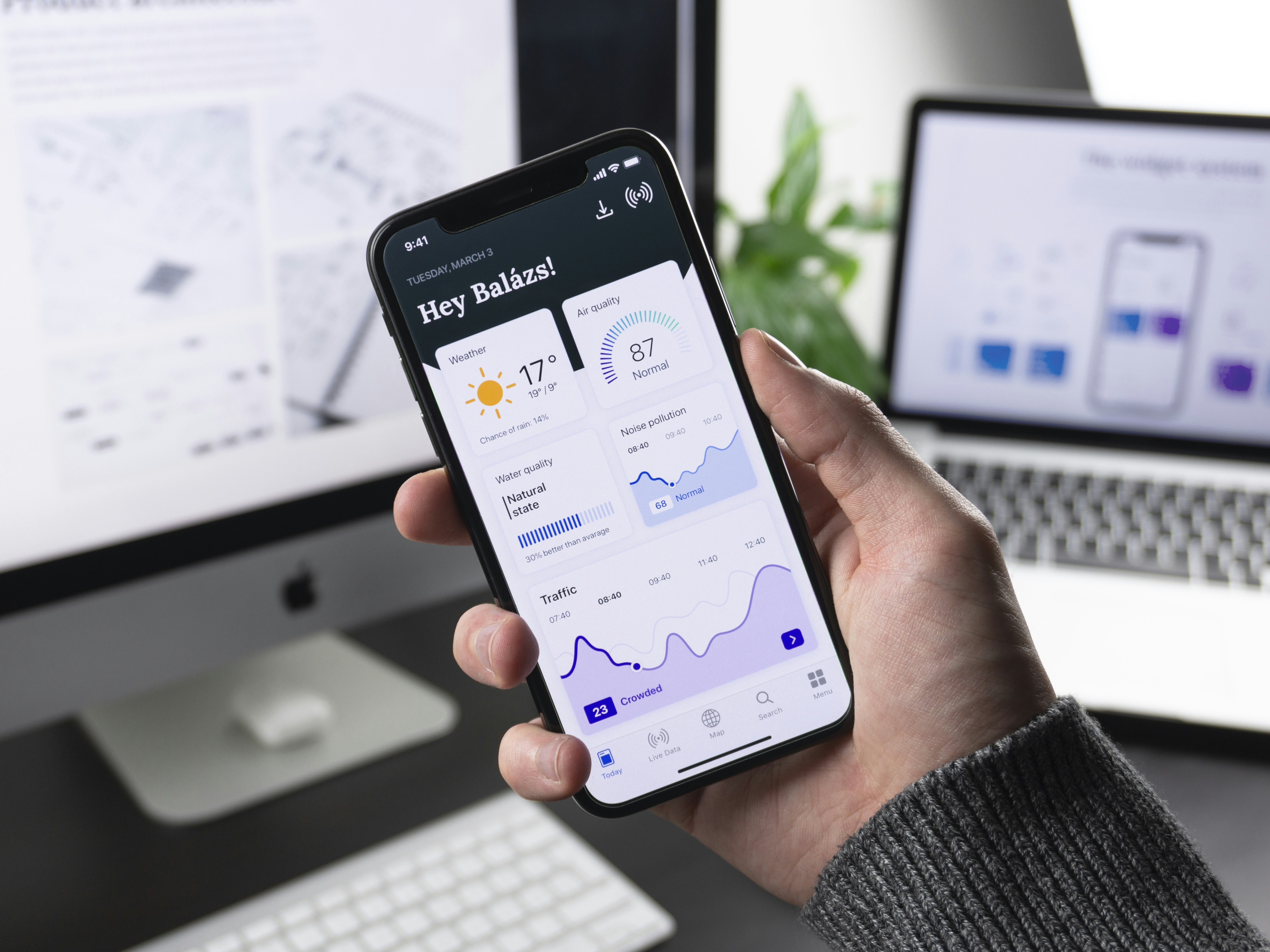
Custom Mobile App Development UAE for Enterprise Digital Solutions
Enterprise businesses across the UAE are moving beyond basic mobile applications toward powerful digital platforms that connect customers, employees, partners, operations and business systems. Custom mobile app development UAE enables organizations to build applications around their exact workflows instead of adapting business processes to generic software.
For enterprises in Dubai, Abu Dhabi, Sharjah, Ajman, Ras Al Khaimah, Fujairah and Al Ain, a custom mobile application can become an important component of a broader digital transformation strategy. From employee applications and customer portals to field-service platforms, ecommerce apps, logistics systems, financial applications and AI-powered business solutions, the right mobile architecture can improve accessibility, automation, productivity and customer engagement.
In 2026, enterprise mobile applications are increasingly being designed as connected digital ecosystems. Instead of operating independently, modern apps can integrate with ERP, CRM, ecommerce, payment, inventory, accounting, analytics, cloud and AI platforms.
What Is Custom Mobile App Development?
Custom mobile app development means creating an application specifically for an organization's business requirements, users, workflows and technology environment. Unlike off-the-shelf applications, a custom solution can be designed around proprietary processes, enterprise data and existing software systems.
A custom enterprise application may include mobile interfaces for customers and employees, a web-based administration portal, backend APIs, databases, cloud infrastructure, authentication, analytics, notifications and integrations with existing business platforms.
Why UAE Enterprises Need Custom Mobile Applications
The UAE has a highly digital business environment where customers and employees increasingly expect fast, mobile-first access to services and information. A custom application can help enterprises create a digital experience that is aligned with their specific business model.
- Improve customer engagement
- Automate repetitive business processes
- Connect distributed teams
- Improve field-service productivity
- Provide real-time business information
- Reduce manual data entry
- Integrate multiple business systems
- Improve operational visibility
- Deliver personalized customer experiences
- Support new digital revenue models
Custom Mobile Apps vs Off-the-Shelf Software
| Factor | Custom Mobile App | Off-the-Shelf Software |
|---|---|---|
| Business workflows | Designed specifically for the organization | Limited to available features |
| User experience | Fully customizable | Generally predefined |
| Integrations | Can be developed around existing systems | Depends on available integrations |
| Scalability | Architecture can be planned for growth | Depends on vendor limitations |
| Data control | Can be designed around enterprise requirements | Vendor-dependent |
| AI capabilities | Can be built into specific workflows | Depends on product roadmap |
| Long-term flexibility | High | Limited by platform |
Types of Custom Enterprise Mobile Apps in the UAE
1. Customer-Facing Applications
Businesses can build branded mobile experiences for customers to browse products, request services, make payments, track orders, manage accounts and communicate with support teams.
2. Employee Mobile Applications
Employee applications can provide access to attendance, tasks, schedules, internal communication, documents, approvals and operational workflows.
3. Field Service Applications
Field teams can use custom apps to receive assignments, navigate locations, update job status, upload images, collect signatures and synchronize information with central systems.
4. Ecommerce Mobile Apps
Retailers can create mobile shopping experiences connected to ecommerce platforms, inventory systems, payment gateways and customer-management tools.
5. Logistics and Delivery Apps
Logistics businesses can implement driver applications, customer tracking, dispatch management, route updates, delivery confirmation and real-time operational dashboards.
6. Healthcare Applications
Healthcare organizations can develop appointment systems, patient portals, telemedicine interfaces, healthcare management tools and secure communication platforms, subject to applicable regulatory requirements.
7. Education and Training Apps
Schools, universities, training centers and academies can build applications for students, parents, teachers, schedules, payments, attendance, notifications and learning resources.
8. Financial and Business Applications
Organizations can build secure applications for dashboards, approvals, transactions, customer accounts and financial workflows with appropriate security and compliance controls.
Key Features of Enterprise Mobile Applications
A successful enterprise app should be designed around business priorities rather than an unnecessarily large feature list. Common capabilities include:
- Secure user registration and authentication
- Role-based access control
- Customer and employee profiles
- Push notifications
- Real-time dashboards
- Document management
- Search and filtering
- Location and GPS functionality
- Digital payments
- Barcode and QR scanning
- Chat and communication
- Offline functionality where required
- Analytics and reporting
- Multilingual interfaces
- API integrations
- AI-powered functionality
Arabic and English Mobile App Development for UAE
For many UAE businesses, bilingual functionality is an important part of product design. A professional Arabic-English application should be designed for both languages from the beginning.
Arabic localization can require right-to-left layouts, RTL navigation, appropriate typography, translated validation messages, Arabic search support and dedicated usability testing. Simply translating English labels after development can result in poor user experiences.
Enterprise Mobile App Architecture
Enterprise applications require a scalable technical architecture that can support users, data, integrations and future features.
Mobile Frontend
The mobile layer provides the user interface and connects users with application services. Depending on project requirements, organizations may choose native iOS and Android development or cross-platform technologies such as Flutter and React Native.
Backend Services
The backend manages authentication, business rules, data processing, APIs, notifications and integrations.
Database
The database stores business and application data while providing appropriate performance, security, backup and recovery capabilities.
API Layer
APIs connect the mobile application to ERP, CRM, ecommerce, payment, logistics, accounting and other enterprise systems.
Cloud Infrastructure
Cloud infrastructure can provide scalable hosting, monitoring, backups, security controls and deployment automation.
ERP and CRM Integration
One of the biggest advantages of custom mobile application development is the ability to connect the mobile experience with existing business systems.
An enterprise app can potentially integrate with:
- ERP systems
- CRM platforms
- Accounting software
- Inventory management
- Warehouse systems
- Human resource platforms
- Customer support systems
- Ecommerce platforms
- Payment gateways
- Logistics platforms
- Business intelligence systems
Instead of requiring employees to enter the same information into multiple systems, API-based integration can help synchronize data and automate workflows.
AI-Powered Enterprise Mobile Apps
AI is becoming an important capability for modern enterprise applications. Instead of treating AI as an isolated chatbot, organizations can embed intelligent functionality directly into business workflows.
Examples include:
- AI customer support assistants
- AI-powered enterprise search
- Intelligent recommendations
- Automated document processing
- Voice-based interfaces
- Predictive analytics
- AI sales assistants
- Intelligent workflow automation
- Personalized content
- AI-powered reporting
Enterprise AI implementation should also consider data privacy, access control, model monitoring, AI usage costs and human oversight.
Mobile App Security for UAE Enterprises
Security should be incorporated into the architecture rather than added immediately before launch. Enterprise applications may handle customer information, employee records, payments, business documents and proprietary data.
Important security measures can include:
- Encrypted communication
- Secure authentication
- Multi-factor authentication
- Role-based authorization
- Secure API design
- Encrypted sensitive data
- Session management
- Audit logging
- Secure cloud configuration
- Regular dependency updates
- Security testing
- Backup and disaster recovery
Businesses operating in regulated industries should also identify applicable UAE laws, regulations and sector-specific compliance requirements during the planning stage.
Native vs Cross-Platform Enterprise App Development
Native Development
Native iOS and Android applications can provide strong platform-specific performance and access to native device capabilities. This approach may be appropriate for applications requiring advanced platform functionality.
Cross-Platform Development
Cross-platform frameworks such as Flutter and React Native can enable organizations to develop applications for multiple platforms using a shared development approach. This can be particularly useful for many enterprise applications where rapid delivery and shared functionality are priorities.
Which Approach Is Better?
There is no universal answer. The correct technology depends on performance requirements, device functionality, budget, development timeline, internal technical capabilities and long-term product strategy.
Custom Mobile App Development Process in UAE
Step 1: Business Discovery
The development team analyzes the organization's objectives, users, workflows, competitors and technical environment.
Step 2: Requirement Analysis
Business requirements are translated into functional and technical specifications.
Step 3: MVP Planning
High-priority features are separated from future enhancements so the organization can launch a useful first version without unnecessary complexity.
Step 4: UI/UX Design
User journeys, wireframes, prototypes and final interface designs are developed for the target audience.
Step 5: Technical Architecture
The team defines mobile technology, backend architecture, APIs, databases, cloud infrastructure, integrations and security requirements.
Step 6: Agile Development
Development is divided into manageable cycles with regular reviews and demonstrations.
Step 7: Testing and Quality Assurance
Functional, device, performance, security, usability and integration testing are performed before production release.
Step 8: Deployment
The application is prepared for Apple App Store and Google Play publication and connected to production infrastructure.
Step 9: Monitoring and Maintenance
Post-launch monitoring helps identify crashes, performance problems and user behavior while ongoing maintenance keeps the application compatible with changing platforms.
How Much Does Custom Mobile App Development Cost in UAE?
The cost of custom mobile app development in the UAE depends on application complexity, number of platforms, UI/UX requirements, backend architecture, integrations, security requirements and development team structure.
| Application Type | Indicative Planning Range | Typical Complexity |
|---|---|---|
| MVP / Basic Business App | AED 30,000–80,000+ | Core workflows and limited integrations |
| Standard Business App | AED 80,000–200,000+ | Multiple user roles and backend services |
| Advanced Enterprise App | AED 150,000–350,000+ | Complex workflows, APIs and integrations |
| Enterprise Digital Platform | AED 300,000+ | Multiple systems, advanced security and scalability |
These are indicative planning ranges rather than fixed UAE market prices. A reliable quotation should be based on a documented scope, technical architecture and feature requirements.
Factors That Influence Mobile App Development Cost
- Number of platforms
- Number of user roles
- UI/UX complexity
- Backend architecture
- Third-party integrations
- Payment functionality
- Real-time functionality
- AI capabilities
- Arabic and English support
- Security requirements
- Cloud infrastructure
- Analytics requirements
- Admin dashboard development
- Testing requirements
- Post-launch maintenance
How to Choose a Custom Mobile App Development Company in UAE
Choosing the right development partner is critical for enterprise projects. Evaluate potential companies based on:
- Relevant enterprise portfolio
- Technical architecture expertise
- Mobile development experience
- Backend and API capabilities
- ERP and CRM integration experience
- Security practices
- UI/UX capabilities
- AI development expertise
- QA and testing process
- Project management methodology
- Source-code ownership
- Cloud and DevOps capabilities
- Post-launch support
- Transparent pricing
Ask prospective providers to demonstrate relevant live applications and explain how they would approach your specific business requirements. The cheapest quotation is not necessarily the lowest-cost solution over the application's lifetime.
Why Choose nDigital.me for Custom Mobile App Development UAE?
nDigital.me provides custom software and digital transformation solutions for businesses in the UAE, including mobile application development, web development, AI development, SaaS platforms, ecommerce solutions, ERP, CRM and business automation.
Our approach focuses on connecting mobile experiences with the broader technology ecosystem of a business. Depending on project requirements, a solution can combine mobile applications, backend APIs, cloud infrastructure, admin dashboards, enterprise integrations and AI-powered functionality.
For UAE enterprises, we can build solutions around business requirements rather than forcing existing processes into a generic application. The development strategy can also be designed for future scalability, additional features, multilingual experiences and integration with evolving enterprise systems.
Enterprise Mobile App Development Services by nDigital.me
- Custom iOS application development
- Android application development
- Flutter mobile app development
- React Native app development
- Enterprise mobile applications
- Customer-facing mobile apps
- Employee mobile applications
- Field-service applications
- Ecommerce mobile apps
- AI-powered mobile applications
- Backend and API development
- ERP and CRM integration
- Payment gateway integration
- Cloud deployment
- Application testing and QA
- Post-launch maintenance
Benefits of Working With a Custom Mobile App Development Partner
A specialized development partner can help enterprises move from an initial business idea to a complete digital product. Instead of treating mobile development as an isolated coding project, the team can consider product strategy, UX, architecture, integrations, security, deployment and future scalability together.
This approach can help businesses avoid common problems such as duplicated data, disconnected systems, poor user experience, inflexible software architecture and expensive redevelopment.
Frequently Asked Questions
What is custom mobile app development in UAE?
Custom mobile app development involves creating an application specifically around a company's business processes, users, technology environment and growth requirements.
How much does enterprise mobile app development cost in UAE?
Enterprise application costs can range from hundreds of thousands of dirhams depending on complexity. Integrations, security, AI, backend systems, platforms and user roles can significantly influence the final cost.
Should UAE businesses build native or cross-platform apps?
Both approaches can be effective. Native development may be preferred for advanced platform-specific requirements, while cross-platform development can be suitable for many business applications requiring efficient multi-platform delivery.
Can a custom mobile app integrate with an ERP?
Yes. A properly designed application can connect to ERP, CRM, accounting, inventory, ecommerce and other enterprise systems through APIs or suitable integration methods.
Can an enterprise mobile application support Arabic and English?
Yes. Bilingual applications can be designed with English and Arabic interfaces, including appropriate RTL layouts and localization.
Can AI be integrated into an enterprise mobile application?
Yes. AI can support intelligent search, customer service, recommendations, document processing, predictive analytics, automation and other business workflows.
How long does custom mobile app development take?
Timelines depend on scope and complexity. A focused MVP may take a few months, while advanced enterprise platforms with multiple integrations and security requirements can require substantially longer development cycles.
Who owns the source code?
Source-code ownership should be explicitly defined in the development agreement. Businesses should also clarify ownership and access for cloud accounts, app-store accounts, repositories, designs, domains and third-party services.
Future of Enterprise Mobile App Development in UAE
The next generation of enterprise applications will increasingly combine mobile interfaces with AI, automation, cloud computing, real-time analytics and connected business systems. Instead of functioning as standalone apps, mobile applications are becoming access points to broader digital platforms.
For UAE businesses, this creates opportunities to build highly specialized digital products that support customers, employees and partners while connecting directly with core business operations.
Conclusion
Custom mobile app development UAE gives enterprises the flexibility to create digital solutions around their exact business requirements. From customer applications and employee platforms to ecommerce, logistics, education, healthcare and AI-powered enterprise systems, custom development can support both current operations and long-term digital transformation.
The most successful enterprise mobile projects begin with clear business objectives, user-focused UX, scalable architecture, secure APIs, reliable integrations and a realistic long-term maintenance strategy. Choosing an experienced development partner can help reduce technical risk while creating a platform that can evolve as the organization grows.
Planning a custom enterprise mobile application in the UAE? Talk to nDigital.me about designing and developing a secure, scalable and business-focused mobile solution for your organization.