


Understand mobile app development costs in the UAE, including MVP, business, ecommerce, marketplace, 14 Sep 2026
How Much Does It Cost to Build a Mobile App in UAE?

Writen by Admin
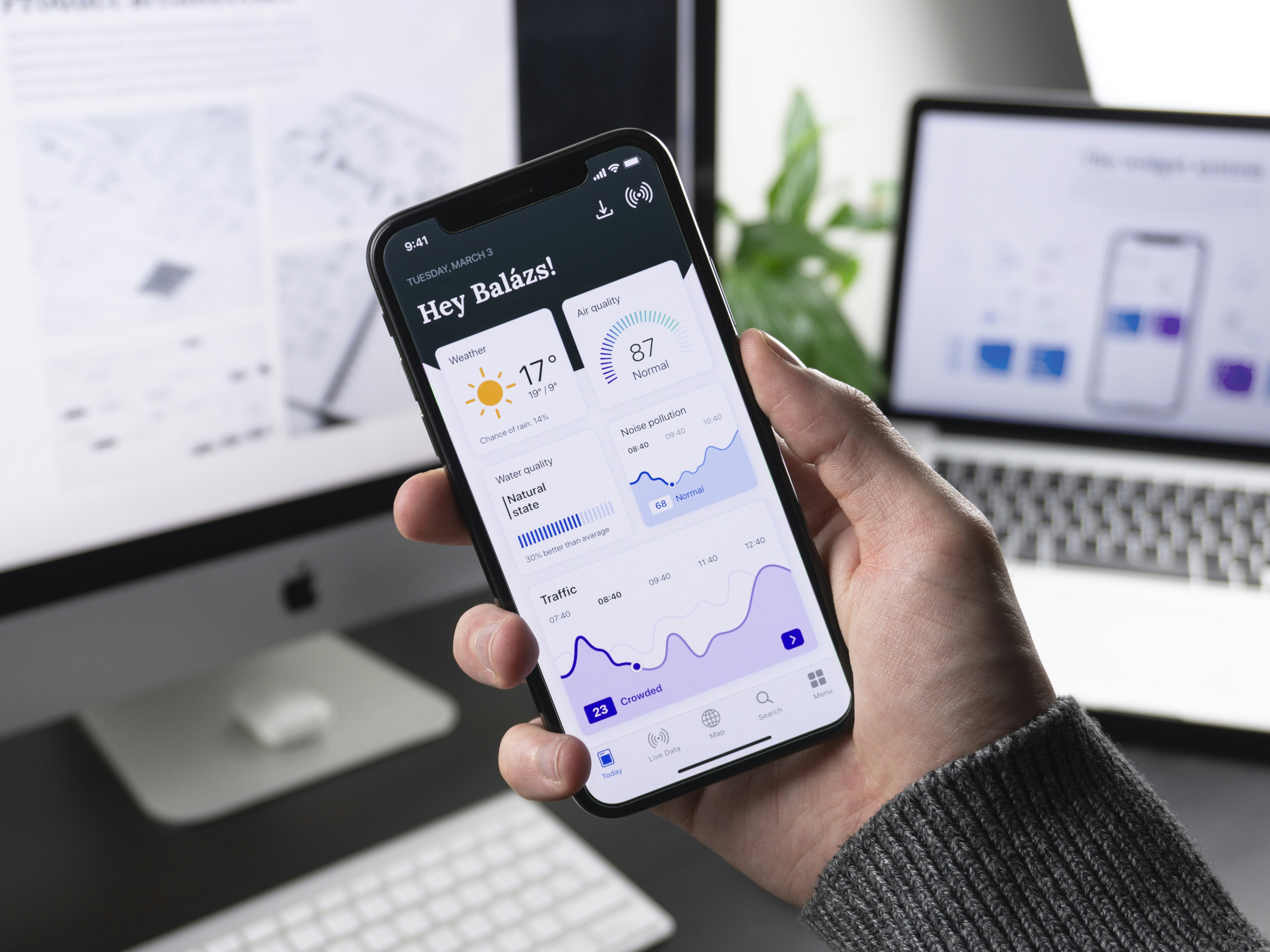
How Much Does It Cost to Build a Mobile App in UAE?
Mobile applications have become an important digital channel for businesses across the UAE. From ecommerce and food delivery to real estate, healthcare, education, sports, finance and enterprise operations, companies are investing in mobile apps to improve customer experiences and streamline business processes.
One of the first questions businesses ask is: how much does it cost to build a mobile app in UAE? The answer depends heavily on the app's features, design, platforms, backend architecture, integrations, security requirements and development approach.
Published 2026 UAE and Dubai market guides show a very wide range, from relatively small MVP projects to enterprise platforms costing several hundred thousand dirhams or more. The variation exists because a simple booking application and a complex marketplace, fintech platform or AI-powered business ecosystem are fundamentally different software projects. :contentReference[oaicite:0]{index=0}
This guide explains the major cost factors so UAE startups, SMEs and enterprises can create a realistic mobile app development budget before starting a project.
Mobile App Development Cost in UAE: Quick Overview
The following figures are indicative planning ranges for 2026, not fixed UAE market prices. Actual project pricing depends on the final scope, technology, number of platforms, integrations, design requirements and development team.
| App Type | Indicative Cost | Typical Timeline |
|---|---|---|
| Prototype / Proof of Concept | AED 10,000–60,000+ | 2–8 weeks |
| Basic Mobile App | AED 30,000–80,000+ | 2–4 months |
| Business Mobile App | AED 70,000–180,000+ | 3–6 months |
| Advanced Ecommerce / Marketplace App | AED 120,000–350,000+ | 4–9 months |
| Complex AI / Real-Time Platform | AED 250,000–600,000+ | 6–12+ months |
| Enterprise Mobile Platform | AED 500,000–1,500,000+ | 9–18+ months |
Current published Dubai estimates similarly show substantial variation, with basic apps and MVPs at the lower end and complex enterprise applications reaching AED 500,000 to more than AED 1 million depending on scope. :contentReference[oaicite:1]{index=1}
What Determines Mobile App Development Cost in UAE?
The price of an app is rarely determined by the number of screens alone. Several technical and business factors influence the total development investment.
- Number of mobile platforms
- App functionality and complexity
- UI/UX design requirements
- Backend and API development
- Number of user roles
- Third-party integrations
- Real-time functionality
- Payment processing
- Location and maps
- AI and machine learning features
- Arabic and English support
- Security and compliance requirements
- Admin dashboard requirements
- Cloud infrastructure
- Testing and quality assurance
- Post-launch maintenance
1. App Platform: iOS, Android or Both
Platform selection is one of the first decisions affecting the development budget.
Building separate native applications for iOS and Android generally requires separate platform-specific development. Cross-platform technologies such as Flutter or React Native can allow businesses to build applications for multiple platforms from a shared codebase, depending on the requirements of the project.
| Approach | Potential Cost Impact | Suitable For |
|---|---|---|
| iOS Only | Lower initial scope | iPhone-focused audiences |
| Android Only | Lower initial scope | Android-focused audiences |
| Flutter / React Native | Efficient multi-platform development | Startups and businesses targeting both platforms |
| Native iOS + Android | Higher development investment | Apps requiring deep platform-specific functionality |
The best choice depends on the application's technical requirements rather than simply selecting the cheapest option.
2. App Complexity
App complexity is one of the biggest cost drivers. A five-screen information app is very different from a platform with real-time payments, chat, location tracking and multiple user roles.
Simple App
A simple app may include login, profile information, static or dynamic content, push notifications and a small number of basic workflows.
Medium-Complexity App
A standard business application may include user accounts, APIs, payment processing, notifications, booking systems, dashboards and third-party integrations.
Complex App
A complex platform may require real-time communication, location tracking, advanced search, multiple user roles, payment systems, AI, custom backend architecture and extensive integrations.
Enterprise App
Enterprise applications can include sophisticated security, complex permissions, ERP and CRM integrations, analytics, multiple business units, high availability requirements and large user volumes.
3. Number of Features
Every additional feature introduces design, development, testing and maintenance requirements. Some features may appear simple from the customer's perspective but require significant backend infrastructure.
- User registration and authentication
- Social login
- OTP verification
- User profiles
- Search and filters
- Booking and scheduling
- Online payments
- Subscriptions
- Push notifications
- Chat and messaging
- Live tracking
- Reviews and ratings
- File uploads
- Video streaming
- Analytics dashboards
- AI assistants
For example, a simple notification may be relatively straightforward, while real-time chat requires messaging infrastructure, notifications, moderation, data storage and additional testing.
4. UI/UX Design Cost
A professional mobile application requires more than attractive screens. UX design determines how users navigate the application and complete important tasks.
Design costs can increase when the app requires custom branding, animations, interactive prototypes, complex dashboards, multiple user journeys or multilingual interfaces.
Typical UI/UX Work Includes
- User journey mapping
- Wireframes
- Information architecture
- Interactive prototypes
- Visual design
- Design systems
- Responsive layouts
- Arabic RTL layouts
- Accessibility considerations
- Usability testing
5. Backend Development and APIs
The mobile application is only one part of the overall system. Most business applications require a backend that manages users, databases, authentication, transactions, business rules and APIs.
A simple app may use a relatively small backend, while a marketplace, delivery platform or enterprise application can require a much more sophisticated architecture.
Backend development may include:
- REST or GraphQL APIs
- Database architecture
- User authentication
- Role-based access control
- Business logic
- File storage
- Notifications
- Payment processing
- Analytics
- Background jobs
- Real-time communication
6. Admin Dashboard Development
Many businesses focus on the mobile application but forget about the administration system required to operate it.
An admin dashboard may allow staff to manage customers, products, bookings, payments, orders, content, reports, notifications and user permissions.
For a marketplace or delivery platform, there may be multiple dashboards for customers, vendors, drivers, managers and administrators. Each additional role can increase development and testing requirements.
7. Third-Party Integrations
Integrations can significantly affect the cost of mobile app development in UAE. A business application may need to communicate with several external systems.
| Integration | Example Function |
|---|---|
| Payment Gateway | Card and digital payment processing |
| Maps | Location, directions and tracking |
| CRM | Customer and lead management |
| ERP | Inventory, finance and business operations |
| SMS / OTP | Verification and notifications |
| Customer communication and notifications | |
| Cloud Storage | Images, documents and media |
| Analytics | User behavior and performance monitoring |
| Shipping | Delivery and tracking information |
Each integration requires development, authentication, testing and ongoing maintenance.
8. Real-Time Features
Real-time functionality generally requires additional backend infrastructure and engineering effort.
Examples include:
- Live delivery tracking
- Real-time chat
- Live sports scores
- Real-time order updates
- Driver location tracking
- Instant notifications
- Live auction systems
- Real-time dashboards
These features require careful consideration of performance, network reliability, synchronization and data consistency.
9. Payment Integration
Apps that accept payments require additional technical and security considerations. UAE businesses may need to integrate appropriate payment providers based on their business model, customer base and commercial requirements.
Payment functionality may include card payments, digital wallets, subscriptions, refunds, transaction records, payment status updates and invoice generation.
Businesses should also clarify whether payment-provider fees and transaction charges are included in the development quotation. They are generally separate from the software development cost.
10. Arabic and English Mobile Apps
Many UAE businesses need applications that support both Arabic and English. Multilingual development can affect design, development and testing requirements.
Arabic support may require right-to-left layouts, Arabic typography, translated content, RTL navigation and testing of forms, buttons, tables and dashboards.
Planning multilingual support from the beginning is generally more efficient than rebuilding the application architecture later.
11. AI Features Can Increase Development Cost
Adding artificial intelligence to a mobile application can introduce additional development and infrastructure requirements.
Possible AI features include:
- AI chat assistants
- Voice assistants
- Personalized recommendations
- AI product search
- Document analysis
- Image recognition
- Predictive analytics
- AI agents
- Automated customer support
- Generative AI content
The cost depends on whether the app uses an external AI API, a customized model, retrieval-augmented generation, private infrastructure or a more advanced AI architecture.
12. Security and Compliance
Security requirements become more important when an app handles sensitive customer, financial, healthcare or business information.
Security-related development can include:
- Secure authentication
- Multi-factor authentication
- Role-based permissions
- Encrypted communication
- Secure data storage
- API security
- Audit logs
- Session management
- Secure payment workflows
- Security testing
Businesses operating in regulated industries should identify applicable UAE legal and regulatory requirements during the discovery phase instead of treating compliance as a final-stage feature.
13. Mobile App Cost by Business Type
Different industries require different feature sets, which means development costs can vary substantially.
| App Type | Indicative Development Range | Typical Features |
|---|---|---|
| Booking App | AED 30,000–100,000+ | Profiles, availability, booking, notifications and payments |
| Ecommerce App | AED 50,000–150,000+ | Catalog, search, cart, payments, orders and notifications |
| Real Estate App | AED 60,000–180,000+ | Listings, maps, search, agents and enquiries |
| Delivery App | AED 70,000–200,000+ | Customer app, driver workflows, tracking and payments |
| Marketplace App | AED 120,000–350,000+ | Customers, sellers, payments, products and administration |
| Healthcare App | AED 100,000–300,000+ | Appointments, patient records, communication and security |
| Sports Academy App | AED 60,000–180,000+ | Students, schedules, attendance, payments and communication |
| Enterprise App | AED 250,000–1,000,000+ | Advanced workflows, integrations, security and analytics |
These are indicative planning ranges. Industry alone does not determine the price; the exact workflows, integrations and technical requirements are more important.
14. Flutter vs Native App Development Cost
Businesses often compare native development with cross-platform frameworks such as Flutter and React Native.
Native Development
Native development uses platform-specific technologies for iOS and Android. It can be appropriate when an application requires deep platform capabilities, specialized performance or extensive native integrations.
Flutter Development
Flutter can allow businesses to develop applications for multiple platforms using a shared codebase. This can reduce duplicated development work for many business applications.
React Native Development
React Native is another cross-platform approach that can be suitable for applications where a shared development architecture and native platform integration are required.
The correct technology should be selected based on the application's functionality, performance requirements, team expertise, maintenance strategy and long-term roadmap.
15. Cost of Building an MVP in UAE
A Minimum Viable Product focuses on the smallest practical version of an application needed to validate a business concept with real users.
A typical MVP may include:
- Authentication
- User profile
- One primary business workflow
- Basic backend
- Push notifications
- Basic admin panel
- Analytics
Instead of building every planned feature at launch, businesses can prioritize the core customer journey and use feedback to determine which features should be developed next.
16. Hidden Costs of Mobile App Development
The initial development quotation is not always the complete cost of owning an application.
Businesses should also budget for:
- Cloud hosting
- Database services
- Third-party API fees
- SMS and OTP charges
- Maps and location services
- AI model usage
- Payment-provider fees
- App Store account fees
- Google Play account fees
- Maintenance and support
- Security updates
- OS compatibility updates
- Analytics services
- Marketing and user acquisition
Some 2026 UAE development guides also identify hosting, third-party services, maintenance and platform fees as costs that should be considered separately from the initial build. :contentReference[oaicite:2]{index=2}
17. Mobile App Maintenance Cost in UAE
Launching an app is not the end of development. iOS and Android operating systems change, dependencies require updates, security vulnerabilities need attention and users expect new features over time.
A maintenance agreement may cover:
- Bug fixes
- Security updates
- OS compatibility
- Server monitoring
- Performance optimization
- Third-party API updates
- Minor feature enhancements
- Database maintenance
- Technical support
Businesses should request a clear maintenance and support proposal alongside the initial development quotation.
18. Mobile App Development Timeline in UAE
The development timeline depends on the complexity and scope of the project.
| Project | Approximate Timeline |
|---|---|
| Prototype | 2–5 weeks |
| Simple App | 2–4 months |
| Business MVP | 3–6 months |
| Advanced App | 4–9 months |
| Complex Platform | 6–12+ months |
| Enterprise Ecosystem | 9–18+ months |
These are planning estimates rather than guarantees. Delays can occur because of changing requirements, integration dependencies, content readiness, testing issues and approval cycles.
19. How to Reduce Mobile App Development Cost
Reducing cost does not necessarily mean choosing the cheapest developer. A better approach is to control scope and avoid unnecessary complexity during the first release.
Start With an MVP
Focus on the core business workflow and postpone secondary features.
Use Cross-Platform Development Where Appropriate
Flutter or React Native can be considered when the project does not require extensive platform-specific functionality.
Use Existing Services
Reliable third-party services can reduce the need to build common infrastructure from scratch.
Define Requirements Before Development
Detailed requirements reduce the risk of expensive scope changes during development.
Design Before Coding
UX prototypes can expose usability problems before engineering resources are committed.
Plan Integrations Early
Identifying API and integration requirements at the beginning helps create a more accurate estimate.
20. How to Choose a Mobile App Development Company in UAE
When comparing mobile app development companies in Dubai or across the UAE, businesses should evaluate more than the initial price.
- Relevant mobile development experience
- Flutter, React Native or native expertise
- Backend development capability
- UI/UX design experience
- API and third-party integration experience
- Security practices
- Testing and QA process
- Relevant industry experience
- Post-launch maintenance
- Source-code ownership terms
- Project documentation
- Communication and project management
Two proposals with the same headline price can represent very different scopes. Always compare features, deliverables, platforms, integrations, testing, deployment and support before making a decision.
21. Mobile App Development Process at nDigital.me
At nDigital.me, mobile app development can be structured around the business objective, target users, technical requirements and long-term product roadmap.
Discovery and Requirements
The project begins by understanding the business model, users, workflows, competitors, required features and technical constraints.
UX and UI Design
User journeys, wireframes, prototypes and visual interfaces are created before development begins.
Technical Architecture
The mobile, backend, database, API, authentication and cloud architecture are planned according to the project's requirements.
Mobile Development
The application is developed using the appropriate native or cross-platform technology.
Backend and Integration Development
APIs, databases, business logic, payment systems, notifications and required third-party integrations are implemented.
Testing
Functional, usability, performance, security and device testing are performed before launch.
Deployment
The application is prepared for the relevant app stores and production infrastructure.
Post-Launch Optimization
Analytics, user feedback and application performance can be used to identify improvements and prioritize future releases.
22. Why Choose nDigital.me for Mobile App Development in UAE?
nDigital.me combines mobile app development, AI, ecommerce, SaaS, ERP, CRM and custom software development capabilities. This allows businesses to develop mobile applications that can operate as part of a broader digital ecosystem.
For UAE businesses, projects can include Arabic and English experiences, payment integration, cloud architecture, AI features, ecommerce functionality, business dashboards, ERP and CRM integrations and scalable backend systems.
Looking to build a mobile app in the UAE? nDigital.me can help transform your idea into a structured mobile product, from discovery and UI/UX design through development, integrations, testing, deployment and ongoing optimization.
Frequently Asked Questions
How much does it cost to build a mobile app in UAE?
A mobile app can range from approximately AED 30,000 for a simple project to several hundred thousand dirhams for complex applications. Enterprise platforms with extensive integrations, security and AI requirements can exceed AED 1 million.
How much does a basic app cost in Dubai?
A basic business application may fall within approximately AED 30,000–80,000+, depending on the number of screens, backend requirements, design and integrations.
How much does an ecommerce mobile app cost in UAE?
An ecommerce mobile application can typically require approximately AED 50,000–150,000+ depending on catalog size, payment integration, customer accounts, backend architecture, notifications and administration requirements.
Is Flutter cheaper than native app development?
Flutter can reduce duplicated development work when one application is required for both iOS and Android. Whether it produces a lower total cost depends on the project's technical requirements and scope.
How long does it take to build a mobile app in UAE?
A simple application may take a few months, while an advanced or enterprise platform can require six months to more than a year depending on functionality and integrations.
What increases mobile app development cost the most?
Major cost drivers include complex features, multiple user roles, separate native applications, real-time functionality, advanced backend systems, third-party integrations, AI, security requirements and extensive custom UI/UX.
Does the mobile app development price include hosting?
Not necessarily. Hosting, databases, third-party APIs, SMS, maps, AI usage and other recurring services may be charged separately from development.
Should I build an MVP first?
An MVP can be useful when a business wants to validate its core product idea before investing in a larger feature set. The appropriate scope depends on the business model and objectives.
Final Thoughts on Mobile App Development Cost UAE
The cost to build a mobile app in UAE depends less on the word “app” and more on what the application needs to accomplish. A basic business application, ecommerce platform, marketplace, AI assistant and enterprise mobile ecosystem can have completely different technical requirements and budgets.
For a realistic estimate, businesses should define their target users, core workflows, platforms, integrations, design requirements, backend architecture, security needs and long-term roadmap before requesting development quotations.
A clear scope allows UAE businesses to compare development proposals more accurately and decide whether to launch a focused MVP or invest in a larger production platform from the beginning.